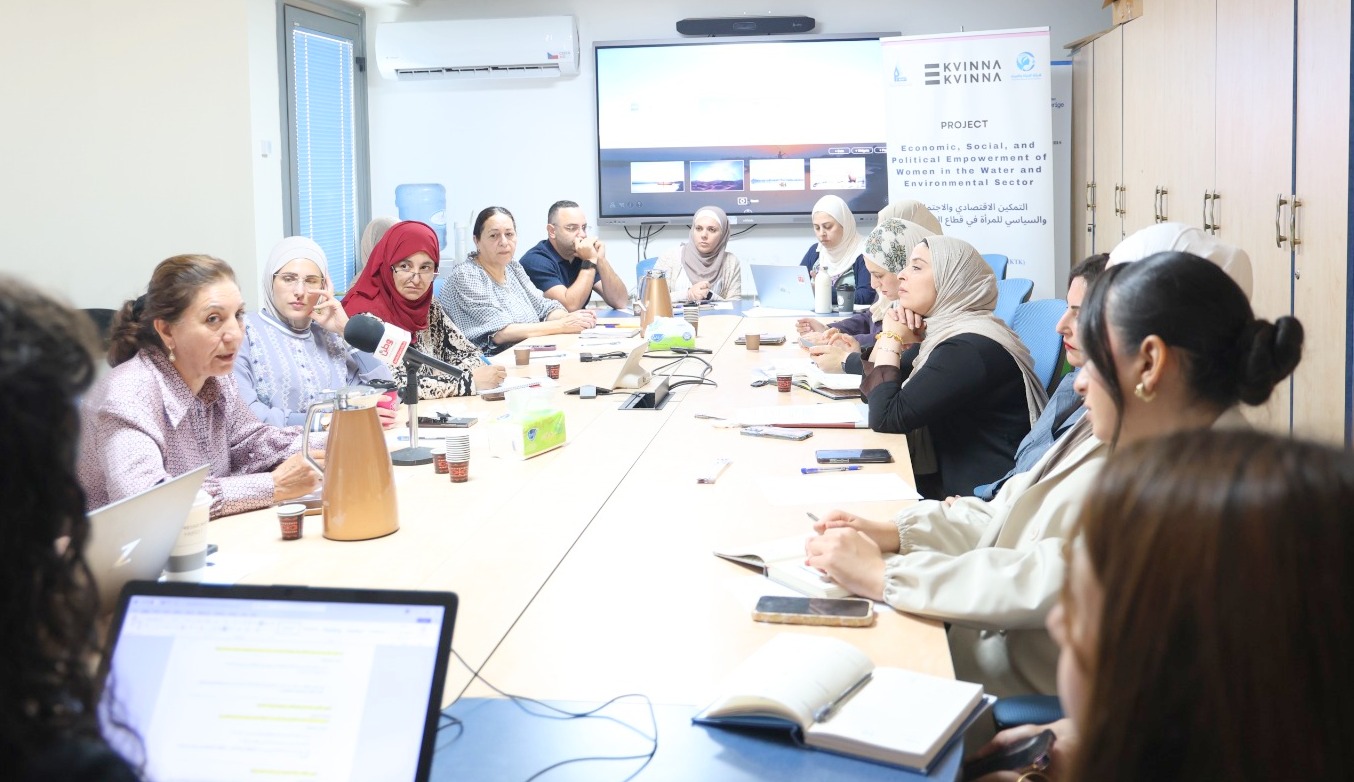
On International Women's Day this year, we stand in unwavering solidarity with Palestinian women, who are battling not only the daily struggles of occupation but also the mounting challenges of environmental degradation and water scarcity. Access to clean water and sanitation is a fundamental human right, upheld by international agreements like the Convention on the Elimination of All Forms of Discrimination Against Women (CEDAW) and the United Nations Sustainable Development Goals (SDGs), specifically Goal 6, which calls for universal access to water and sanitation. Yet, despite these international commitments, Palestinian women continue to fight for their most basic rights, including the right to water, an issue that goes beyond survival to one of justice, diplomacy, and international advocacy.
Reflecting on this year's International Women's Day theme, "Gender equality today for a sustainable tomorrow," we honor the resilience and leadership of Palestinian women in climate adaptation, water management, and environmental protection. As the backbone of their communities, their voices are essential, yet too often marginalized in decision-making. This reality is starkly evident in Gaza, where the destruction of water infrastructure following October 7, 2023, has deepened an already dire humanitarian crisis. Palestinian women, as primary caregivers, are left to navigate overwhelming challenges in accessing clean water, often in unsafe conditions. The lack of clean water exposes families to preventable diseases, disproportionately affecting women and children. Their fight for water is not only a struggle for survival but also a fight for dignity, health, and a future worth living, and it is a key issue in Palestinian women's diplomacy on the global stage.
In the West Bank, Palestinian women face a different but equally severe set of obstacles. The Israeli occupation continues to control access to water resources, severely limiting Palestinian access, while settlers enjoy near-unrestricted access. As a result, many Palestinian women are forced to spend hours each day collecting water, impacting their physical health, education, and economic opportunities. Despite these challenges, Palestinian women are stepping up as leaders in the fight for better water management, environmental protection, and sustainable practices, and they are increasingly engaging in water diplomacy to bring international attention to their plight. Their voices are essential in demanding policy changes to guarantee that water and sanitation are recognized as fundamental human rights, and they are actively participating in international forums to advocate for these rights.
Palestinian women play a crucial role beyond their caregiving responsibilities, serving as leaders and decision-makers in their communities. They lead grassroots initiatives to secure water access, strengthen climate resilience, and protect the environment. Despite their vital contributions, they are often overlooked in formal decision-making spaces. For example, in Gaza, women-led organizations have been at the forefront of efforts to rebuild water infrastructure and advocate for international aid, despite the ongoing blockade and restrictions. In the West Bank, women's cooperatives have successfully implemented rainwater harvesting projects, demonstrating the potential for community-led solutions to water scarcity. Their leadership is essential in creating sustainable, long-term solutions to these pressing challenges.
Palestinian local frameworks, such as the Palestinian National Development Plan and the Palestinian Authority's Gender Equality Strategy, emphasize the need for women's participation in decision-making, particularly in water, sanitation, and environmental issues. It is vital that Palestinian women are empowered to shape policies that directly affect their lives, ensuring their voices are central in the development and implementation of solutions that uphold their rights.
On this day, we reaffirm our commitment to supporting Palestinian women as leaders and advocates for their right to clean water, sanitation, and a sustainable livelihood. We call for global recognition of their resilience and a stronger commitment to ensuring women's rights are fully realized across Palestine, especially by increasing the support for Palestinian women’s water diplomacy efforts. International organizations and governments must prioritize funding and support for initiatives led by Palestinian women that tackle water scarcity and promote sustainable water management.